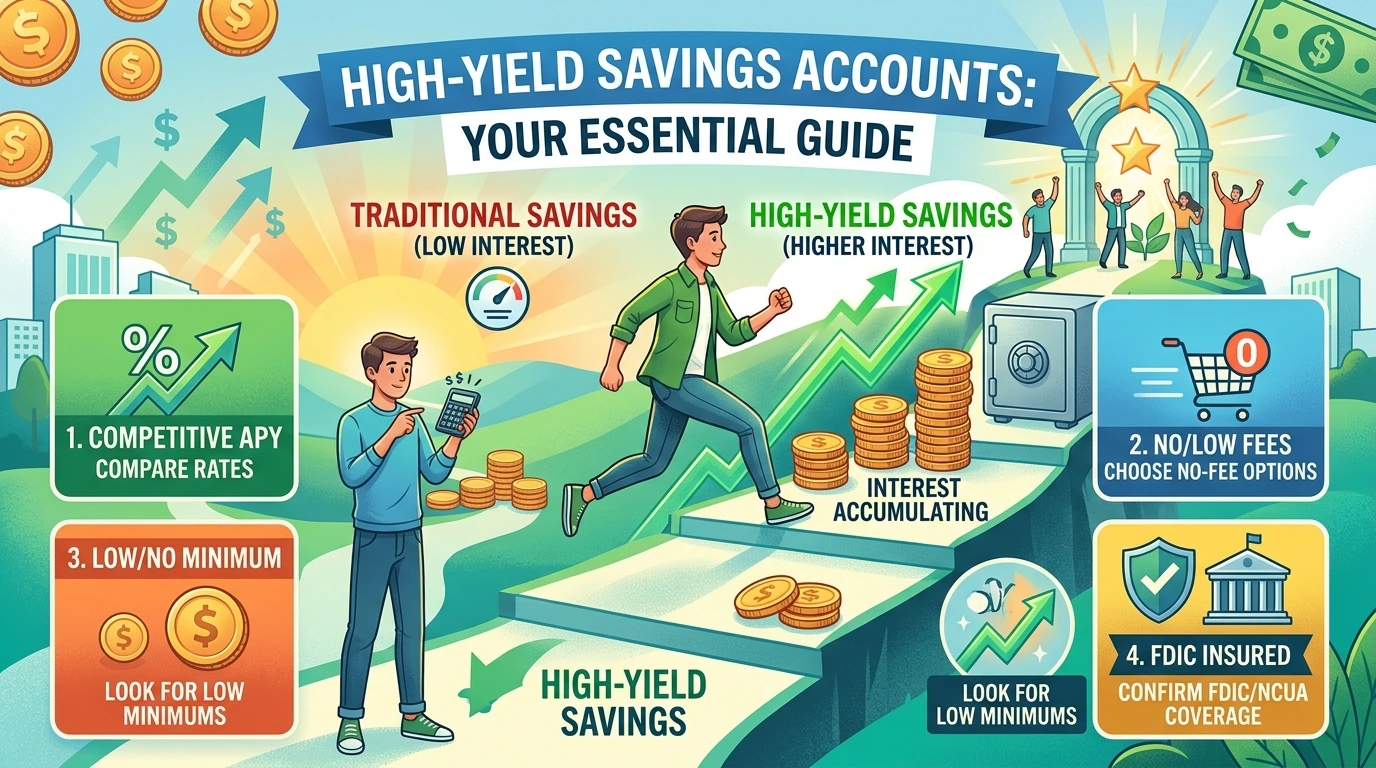
Best High Yield Savings Accounts for Beginners
Introduction
Best High Yield Savings Accounts for Beginners that doesn’t earn virtually any interest, you’re not hallucinating. The majority of traditional banks will provide very little on your balance and a high yield savings account can provide many times that. To the beginner, this can be confusing in the beginning, having dozens of banks and the rates changing from day to day.
What Makes a Savings Account “High Yield”
HYSA (high yield savings account) earns a much higher interest rate than a standard savings account. The national average APY in all savings accounts is under 1%, with many large national banks offering below-average rates on regular savings.
Why the Difference Matters So Much
HYSA (high yield savings account) earns a much higher interest rate than a standard savings account. The national average APY in all savings accounts is under 1%, with many large national banks offering below-average rates on regular savings.
How High Yield Savings Accounts Actually Work
These accounts are similar to a regular savings account. You can put money in, it’s always there, and it accumulates interest over time. Popular banks offering top high-yield savings include Capital One, Synchrony, Ally and Marcus by Goldman Sachs, which are typically offered online, not in a bank branch.
Online Banks Usually Offer Better Rates
Online-only banks are typically able to offer better rates than brick-and-mortar banks because they save on costs of running physical branches. This is because savings are frequently passed on to customers as higher interest on savings.
What Beginners Should Look For
The process of picking the first high-yield savings account doesn’t have to be complicated. Pay attention to a few salient points.
1. Competitive APY
Find accounts that come with a clearly higher APY than the national average. The Federal Reserve has made some changes to their policies throughout 2026, but online savings accounts generally beat big banks’ savings by a long shot.
2. No or Low Monthly Fees
If the monthly maintenance fees cancel out a high interest rate, it isn’t worth as much. Some of the best HYSA options don’t even have a monthly fee, so look for accounts that won’t cost you much at all.
3. Low or No Minimum Balance Requirements
Newbies tend to go with smaller amounts. Look for accounts that do not have minimum balances that require a lot of money to open or maintain an account without penalties.
4. FDIC or NCUA Insurance
Verify that the account is federally insured, through the FDIC (for banks) or the NCUA (for credit unions). If the institution is having financial difficulties, this will safeguard your funds up to legal limits.
Steps to Open Your First High Yield Savings Account
It’s easier for beginners to get started than they think.
Compare a Few Options First
Take the time to compare two or three accounts side by side, not just the first one that you come across, to get details such as APY, fees, and requirements.
Gather Basic Personal Information
To open an online account, you will normally have to provide identification, your Social Security number and other simple contact details.
Link Your Existing Bank Account
The money transfer process is simple and quick from your existing checking account to the HYSA provider, and most of them offer it.
Set Up Automatic Transfers
There is an advantage of setting up small, regular transfers into your new account, so that you are building up savings consistently and without having to remember to make them every month.
Quick Comparison: What to Prioritize as a Beginner
| Factor | Why It Matters | Beginner Tip |
| APY | Determines how fast your money grows | Compare current rates before opening |
| Fees | Reduces overall earnings if too high | Choose no-fee accounts when possible |
| Minimum balance | Affects accessibility for smaller savers | Look for low or no minimums |
| Insurance | Protects your deposited money | Confirm FDIC or NCUA coverage |
Common Mistakes Beginners Make
Some simple mishaps can make your savings account less effective.
Chasing the Highest Rate Without Reading the Fine Print
The max advertised rate may be contingent on specific factors, such as having a minimum balance or making direct deposits. Don’t assume that you will always get the best rate because it could be different.
Treating It Like a Checking Account
Withdrawals may incur fees or preclude full interest earning for some accounts. Keep your HYSA for saving and not for daily use.
Forgetting to Monitor Rate Changes
The interest rates these accounts offer may vary from time to time, depending on the overall economy. Periodic rates checks will help you make sure that your rate remains competitive with newer options.
Is a High Yield Savings Account Right for You
The accounts are good for short-term savings plans, emergency savings, or savings you may need within the next couple of years. They are not intended for growth over many years as a retirement investment account is intended to grow over time and probably cannot equal the returns of investing over many years with interest rates, though they are useful.
Pair It With Other Financial Tools
A high-yield savings account is ideal as a component of a comprehensive financial strategy, along with budgeting, establishing an emergency savings account and maintaining it and finally, retirement or investment accounts as your financial situation expands.
Final Thoughts
It doesn’t take a lot of money savvy to open your first high-yield savings account. Look for competitive rate, low fees and minimum balance requirements, as well as insurance coverage protection. Then, automate your savings, check your account now and again, and let your savings accumulate gradually. A small measure that will make a meaningful difference over the years.
FAQs
- Will my money be safe in a high-yield savings account?
Yes indeed, as long as the account is insured by the FDIC or the National Credit Union Share Insurance Fund, the money you deposit will be safe, to a legal limit.
- Is there a great amount of money that must be deposited in order to open a high-yield savings account?
No, there are many accounts that do not require a minimum amount or even any amount at all.
- Is there any way to lose money within a high-yield savings account?
These accounts do not represent any investment risk; however, the rates may drop over time, depending on the overall economic situation.
- A high-yield savings account is different from a regular savings account in what way?
It just provides a much higher interest rate, but works much the same as far as accessibility and usability.



One Comment