How to Build an Emergency Fund From Scratch
Introduction
How to Build an Emergency Fund From Scratch an unexpected medical expense. Any work that stops abruptly. Life happens, and if you don’t have any savings to fall back on, a simple emergency can make your life very stressful.
Emergency funds aren’t a sign of wealth. It’s the difference between having a cushion and having no cushion, it’s the difference between a bad month and a bad year. If you’re getting into this from the ground up, it’s all explained here.
What an Emergency Fund Actually Is
An emergency fund is money that’s saved for something that you don’t expect to buy, such as a vacation, not a shopping spree, not a planned purchase. It only serves to pay for medical emergencies, urgent repair work on the car, or lost earnings. This fund eliminates the fear of unexpected costs.
Why It Matters More Than People Realize
If no savings are there at the time of the weather event, the costs of the event can be shifted to credit card debt, which may persist long after the time of the event. An emergency fund makes that possible, providing you with space between costs and panic.
How Much Should You Actually Save
There is no such thing as a perfect number, but the general rule is to have a realistic target that will help you to set your expectations.
Starting Small: The First Milestone
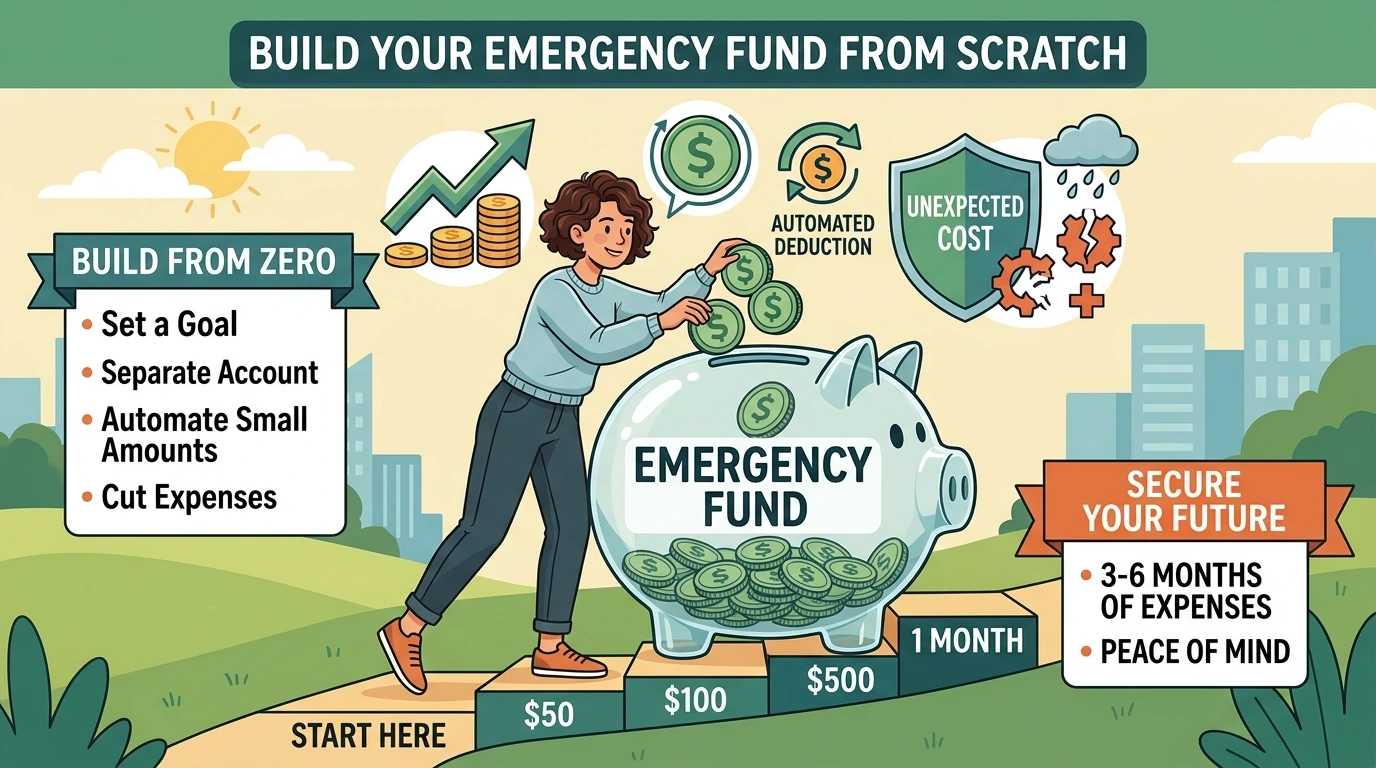
A financial expert might recommend a smaller, more manageable amount, such as $500 to $1,000. This is a first cushion for most common emergencies which doesn’t feel like you need to reach too far too fast.
The Long-Term Goal
Eventually, try to put aside 3 to 6 months of necessary living costs. This bigger cushion will help protect from larger disturbances such as being fired or facing more prolonged health issues and provide you with genuine economic security.
Steps to Build an Emergency Fund From Zero
It seems like you’re starting from scratch, break it down into steps, much easier to manage.
1. Set a Specific, Realistic First Goal
Instead of setting yourself a daunting goal for 6 months, begin with a more modest amount. Getting to $500 early gives them momentum and makes it a reality that they can do it.
2. Open a Separate Savings Account
Save emergency money in a separate account from your regular checking account. This helps to curb the urge to use it for non-emergencies as it isn’t in your everyday spending wallet.
3. Automate Small, Consistent Contributions
Make automatic payments, even for as little as $20 or $50 put aside each payday. The consistency is more important than the quantity, particularly at the beginning to begin this habit.
4. Cut One or Two Unnecessary Expenses
Check on subscription accounts, eating habits or buying things on impulse. Savings over time will make a lot of difference when you can move money from unwarranted expenditure to saving.
5. Use Windfalls Wisely
Tax refunds, bonuses, cash gifts help get big shot arm. Even if you can save 50 percent of a windfall, it is the same as making your progress faster without putting a significant dent in your budget.
Where to Keep Your Emergency Fund
Not all savings accounts are created equal.
High-Yield Savings Accounts
With these accounts, you’ll get higher interest rates than a regular savings account, and still have easy access to your cash should you need it. They are safe investments with some growth potential, making them a popular choice for an emergency fund.
Avoid Risky or Illiquid Options
Don’t keep emergency money in investments such as stocks because if there is a dip in the market, your emergency fund could be lower than what you need it to be. Accessibility and stability more important than growth potential here.
Quick Comparison: Emergency Fund Milestones
| Milestone | Amount | Purpose |
| Starter fund | $500 – $1,000 | Covers small, common emergencies |
| Intermediate fund | 1-3 months of expenses | Covers moderate disruptions |
| Full emergency fund | 3-6 months of expenses | Covers job loss or major emergencies |
Common Mistakes to Avoid
Well-meaning savers have some common problems.
Treating It Like a Regular Savings Account
Emergency savings cannot be used for discretionary spending. Use it only for unforeseen needs and not for a planned cost or desire.
Waiting for the “Right Time” to Start
There are lots of people who put off saving money until they have a greater income or until they have paid off their debt. It’s better to start small now than to wait for ideal financial circumstances.
Setting an Unrealistic Initial Goal
It may seem like a discouraging goal to expect to save six months of expenses up front. As the process continues, the smaller, incremental goals help to maintain the motivation.
Staying Consistent Over Time
Creating an emergency fund not something done one day. It needs continual monitoring, particularly expenses vary income fluctuates. Regularly review your savings target, especially you experienced major life change, change in income, a move, increased family size. Don’t make the contributions optional add-on end of the month, but rather a necessary expense like rent or utilities.
Replenish After Using It
If you dip into your emergency fund cover actual emergency, should start rebuilding your emergency fund quickly possible. Replenish similar you created it.
Final Thoughts
Creating emergency fund from scratch requires time, habit could extremely beneficial your finances. Do the little things at a time, be consistent, and avoid touching it except for real emergencies. That steadily increasing cushion is no longer just a number in a bank account, however, over time. It’s peace of mind, there whenever your life throws up something unexpected.
FAQs
How much should be in emergency fund?
These experts recommend that you save 3-6 months of living expenses; a good initial target is $500 – $1,000.
What is the best account to have for holding an emergency money reserve?
A high yield savings account is a decent compromise between the interest earned and accessibility.
Is it OK to use the emergency fund for planned expenses?
It should only be used when there is a real emergency, not for planned purchases, or non-urgent expenses.
How long do you think it will take you to save a full emergency fund?
There is a lot of variation, but for most people it’s from several months to a few years, depending on income and expenses.
Do I need to pay off debt before saving for an emergency fund?
In many ways, financial advisors suggest establishing your small savings account first, then paying off your debt, to avoid using credit in emergencies.




One Comment