How to Pay Off Credit Card Debt Faster
How to Pay Off Credit Card Debt Faster
How to Pay Off Credit Card Debt Faster has a way of slipping in through the cracks of your day-to-day life. If a payment is missed, it becomes a charge for interest. No matter how much you pay, interest charges become a fixed amount that reduces little.
When you’re tired of paying the interest not the principal on your debt, it’s time you had a real plan. Here’s how to go about accelerating things.
Why Credit Card Debt Grows So Fast
In terms of interest charged on the debt, credit cards have one of the highest rates, usually from 18% to 30%. Most of the amount paid is interest when you only pay the minimum. That’s why debt might feel like it’s hardly progressing even if you are paying it consistently.
The Minimum Payment Trap
In terms of interest charged on the debt, credit cards have one of the highest rates, usually from 18% to 30%. Most of the amount paid is interest when you only pay the minimum. That’s why debt might feel like it’s hardly progressing even if you are paying it consistently.
Choose a Payoff Strategy That Fits You
Debt payoff advice can be boiled down to two popular strategies, both of which can be effective and with a difference.
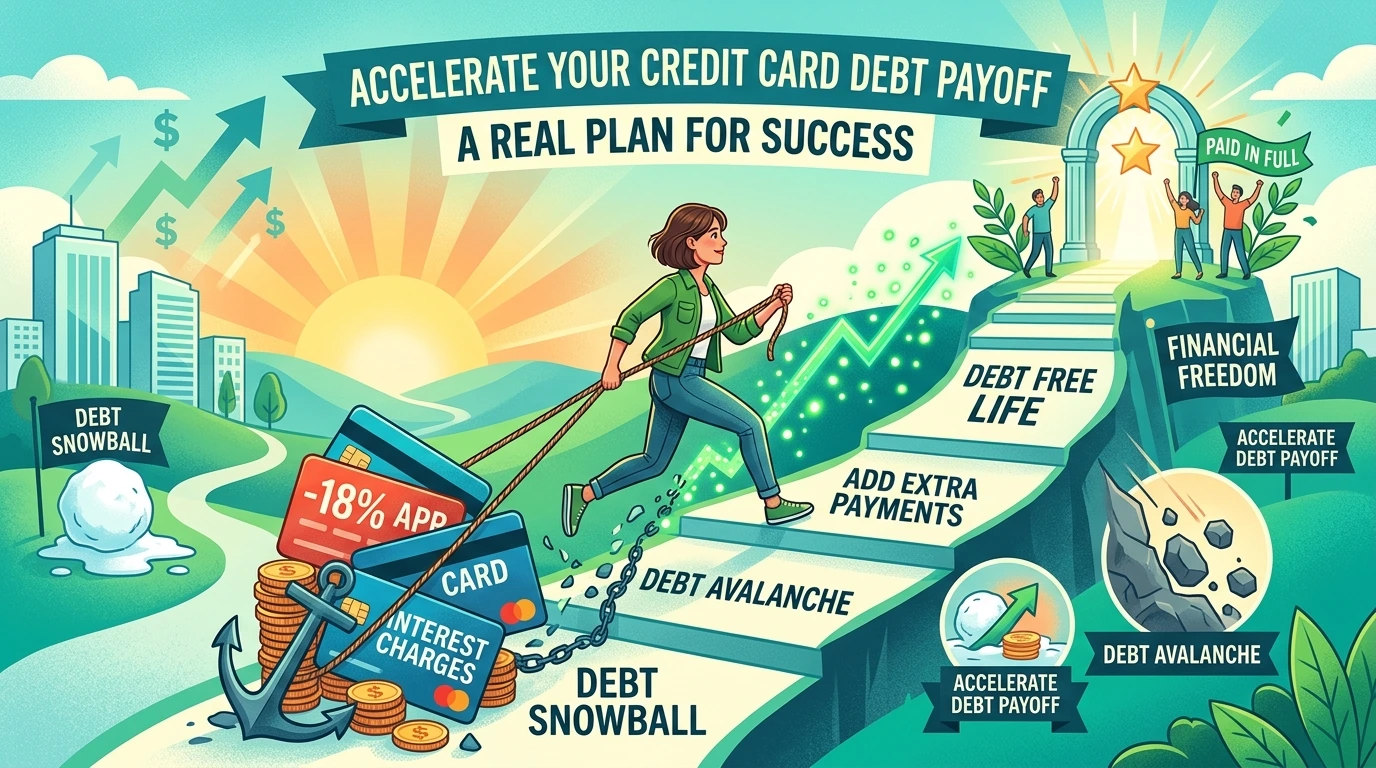
The Debt Snowball Method
This approach is to pay off the smallest balance first and minimum payments on the others. When the smallest debt is cleared, the amount paid is added to the next smallest debt. It’s motivating because of the momentum that is built during the first wins.
The Debt Avalanche Method
Debt with the highest interest rate will be paid first, no matter how much is owed. From a mathematical point of view, this approach is the most cost-effective in total, because it decreases the interest charges more quickly.
Practical Ways to Pay Off Debt Faster
While it’s important to have a strategy, it’s just as important to implement it. These practical steps will help to accelerate this process considerably.
1. Pay More Than the Minimum
That can make a big difference in how much you’ll pay in interest and how long you will be paying off the loan if you put an extra $20 or $50 every month. It all adds up on the monthly and yearly scale, when it’s small increments.
2. Cut Unnecessary Expenses Temporarily
Check on subscription, eating and spending. Even a small portion of that increased savings should be directed into debt payments and this will speed up progress without a radical change in lifestyle.
3. Use Windfalls Strategically
If possible, any unexpected cash, tax refunds or bonuses should be applied to high interest debt first. You can save months off your payoff period with this one habit.
4. Consider a Balance Transfer
There are some credit cards that will allow you to transfer your debt and pay no interest for a limited time. If done wisely, this rate break will enable you to save more money on the principal balance with the money you save from not paying interest.
5. Negotiate a Lower Interest Rate
It’s daunting to call your card company and ask for a lower rate, but it is more effective than you might think; especially if you have a good payment history.
Quick Comparison: Debt Payoff Strategies
| Strategy | Focus | Best For |
| Debt snowball | Smallest balance first | Motivation and momentum |
| Debt avalanche | Highest interest rate first | Saving the most money overall |
| Balance transfer | Reduced interest temporarily | Larger balances with good credit |
| Extra payments | Any remaining balance | Speeding up any strategy |
Avoiding Common Mistakes While Paying Off Debt
The best people have their share of mistakes when trying to repay their debt.
Continuing to Add New Charges
When you’re still paying off debt and trying to make more purchases, it undoes the progress made fast. Treat the card as something that you cannot use for much, or just for must-have items that you can pay off right away.
Ignoring a Budget Entirely
If you don’t keep track of your spending, it’s easy to get lost on where to find additional payment money. If you’re more efficient with your monthly budget it’s much easier to be sustainable.
Focusing Only on One Card While Ignoring Others
With multiple cards, it’s possible that fees or missed payments may accumulate on other cards if you don’t pay off the smaller balances. Pay minimal payments on all of the cards and put additional money into a single target balance.
Staying Motivated During a Long Payoff Journey
Making the debt payment can seem tedious, particularly if you’re paying off high interest debt. It’s easy to keep track of progress when it’s done visually, in a chart or app, so things don’t get lost in the shuffle. Reward yourself with something small, such as paying off one card off in full, instead of waiting until you’ve paid off everything.
Remind Yourself Why You Started
It can be financial freedom, less stress saving for a specific event goal, keeping your motivation forefront of your mind helps you stay focused, particularly you feel like not making progress you had hoped during those months.
Final Thoughts
There’s no single big decision that needs to be made to pay off credit card debt faster. It’s all about avoiding unnecessary spending, deciding on the best strategy, making steady, deliberate efforts and putting that additional money towards your debt balance whenever you can.
Some months may go by in a slow pace of progress, but each extra payment brings your closer to being debt free. Be consistent, measure progress and know that this takes time, even though it seems slow.
FAQs
Should I pay off the debt with the lowest amount or the highest interest rate?
It depends on your personality. The smallest-first approach builds motivation and the highest-interest approach will save money overall.
Is there really that much benefit to paying extra on your debt?
In addition to the savings in total interest paid, yes, even the small extra payments shortens the payoff period over time.
Should a person use a balance transfer to pay off their credit card debt?
It could be, particularly with the 0% introduction pricing, but as long as the balance is repaid by the end of the promotion.
Is it possible to negotiate a reduced rate of interest with my credit card provider?
Indeed, many businesses will reduce fees – particularly if they have a good payment history.
What’s the average length of time to get out of credit card debt?
It depends on the size of the balance and your monthly repayments, but if you pay extra you can substantially reduce the average payoff period.




2 Comments